
Bountiful Broadleaf Birds
I'm used to Scottish conifers, so visiting Welsh oak woodlands was like entering a whole new world

There’s something about broad-leaved woodland that feels like a jungle. ‘Lush’ is the word that springs to mind, with a dense canopy of zingy lime leaves concealing thousands of birds and insects.
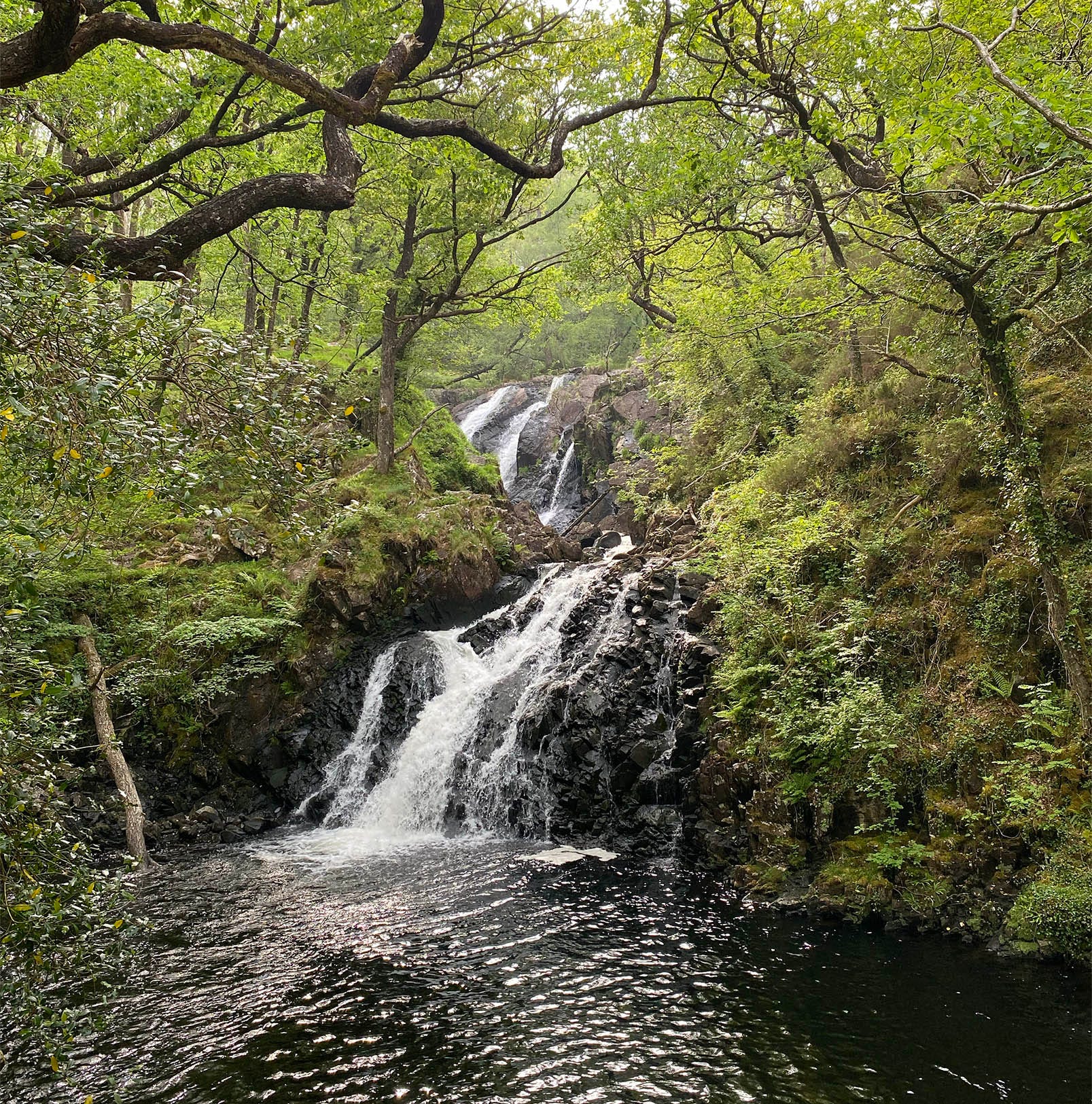
I live in northeast Scotland, and while it has a spectacular coastline, its woodlands are conifer-heavy. The Cairngorms National Park in particular has stunning granny pines that you need to crane your neck to glimpse the top of. I love them, especially the pine martens and crested tits that make their homes in them, but it wasn’t until I visited Wales last month that I realised how much I missed broad-leaved forests, in particular those with oaks.
Because this habitat is so uncommon in my home patch, I was excited to search for different birds, some of which I’d only seen in books. Allow me to introduce three oak specialists, as well as a surprise insect that looks fresh out of a carnival.
Redstart
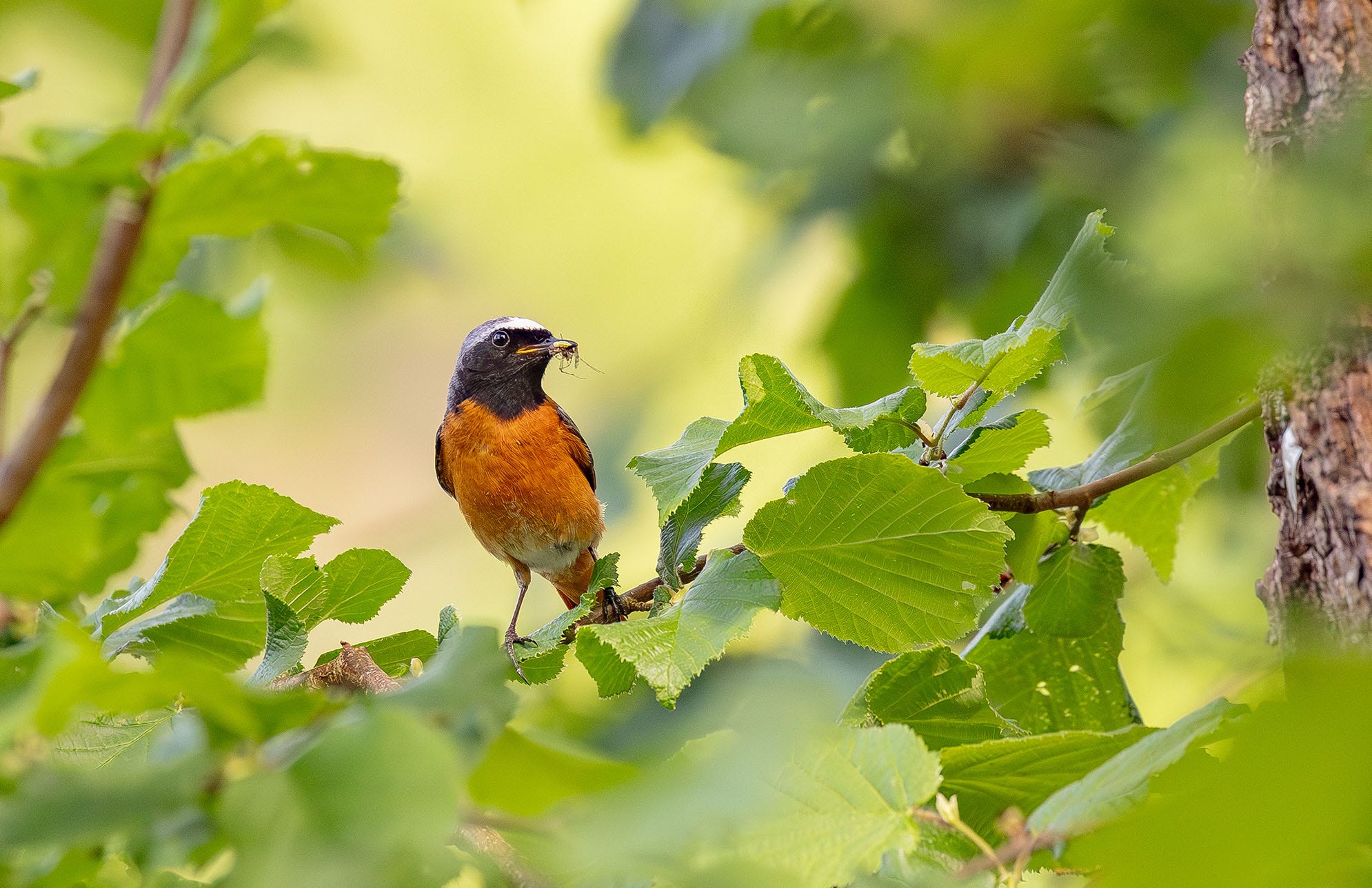
Redstarts are similar in size and shape to robins, but the male has a grey cap and a lot more black in his plumage. Females have the same coppery tail, which they often twitch and fan as they perch. Redstarts arrive in the UK in spring, staying throughout the summer and often raising two broods each season.
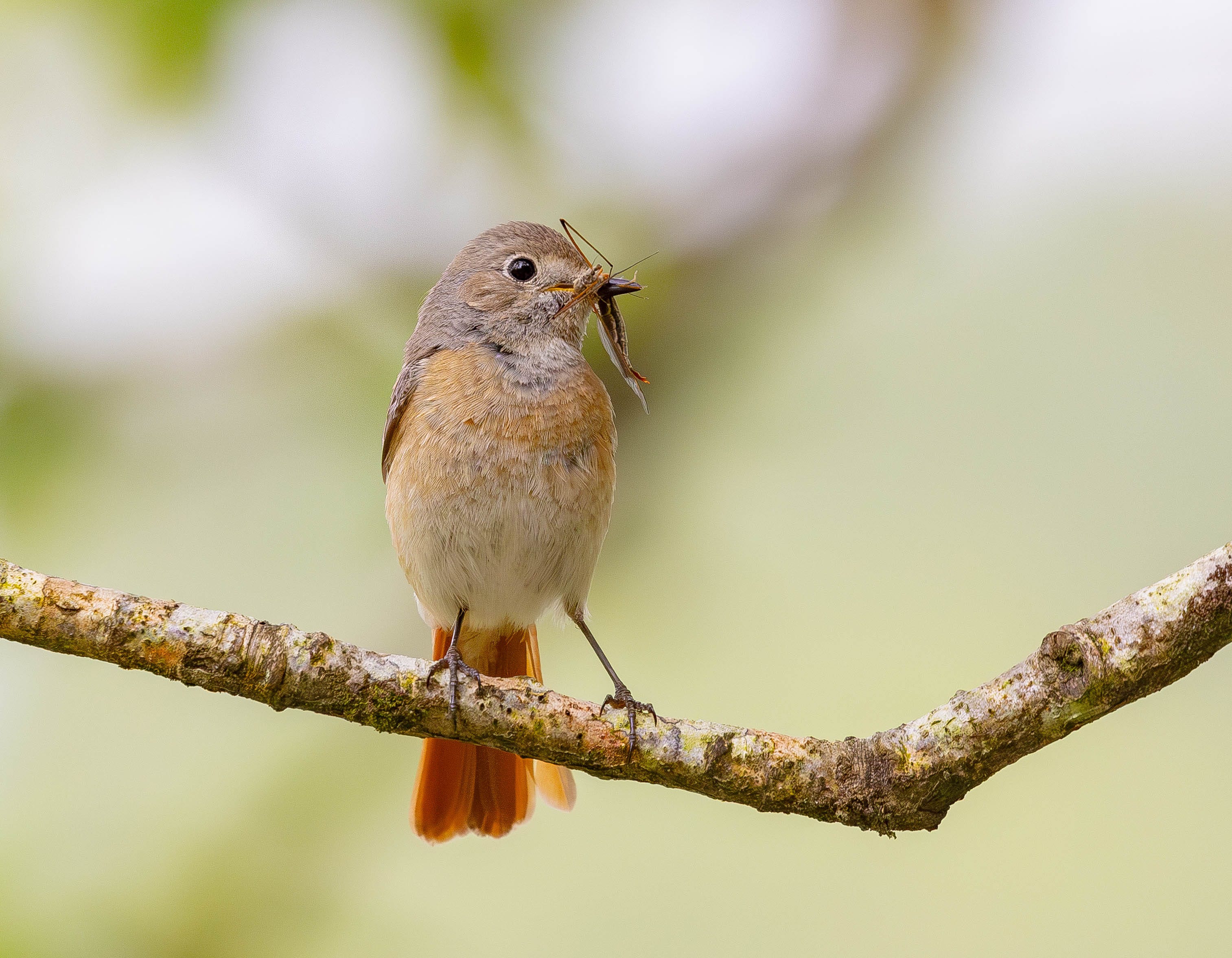
I had been expecting a long search for redstarts, but just a handful of steps into a forest walk near Dolgellau, a rusty red tail caught my eye. It was a female chirruping from a high branch, a moustache of spider legs sticking out of her bill. The forest was threaded through with a stream, so I settled down on the bank to watch her.
Just a few minutes later, a male appeared, caterpillars and more spiders dangling from his own bill. He only perched for a moment, but I managed to nab a photo of his gorgeous red breast in a gap in the leaves before he nipped away to deliver his catch to his waiting chicks.
Pied Flycatcher
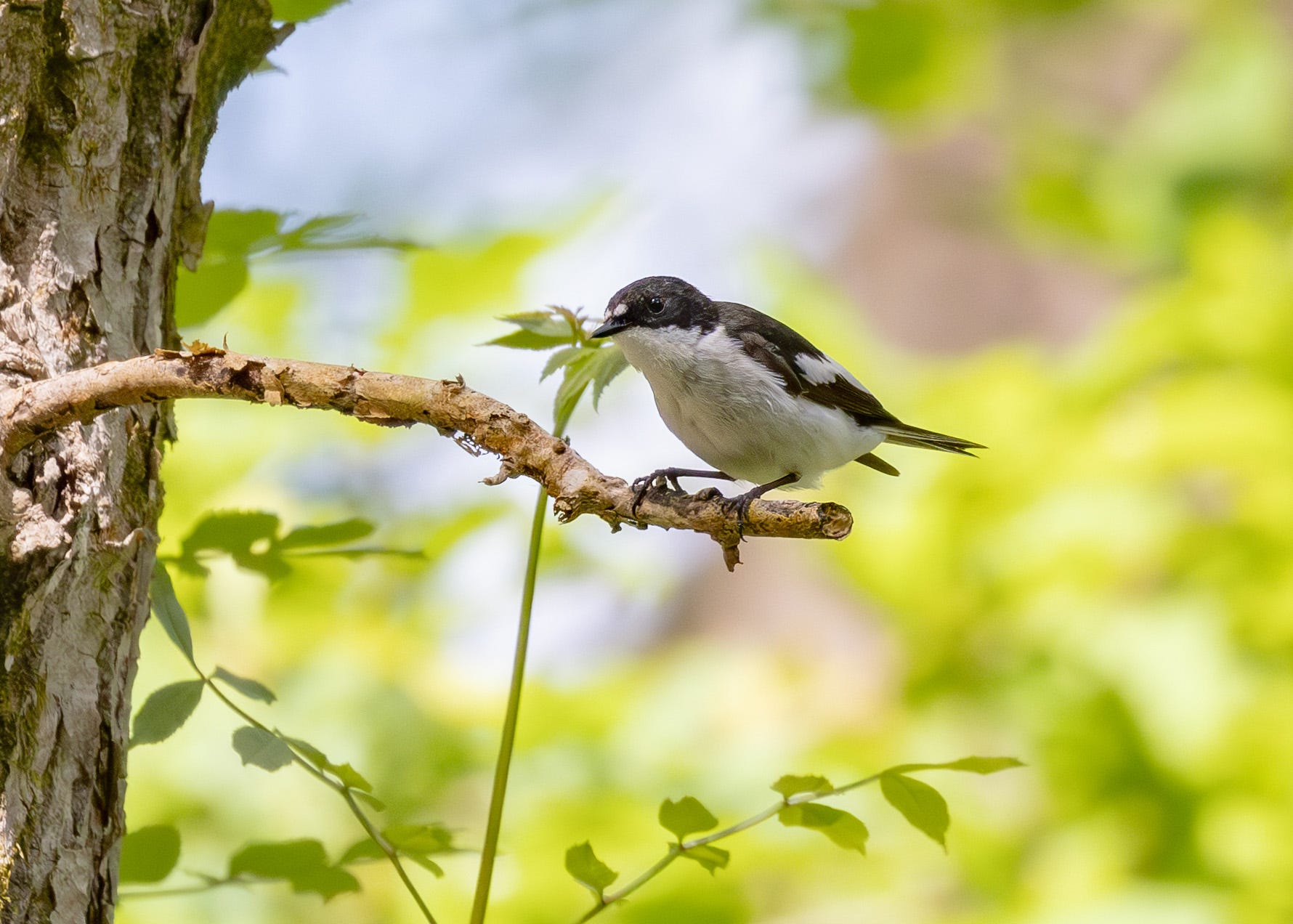
This little beauty was the reason I went to Wales in the first place. I’d never seen a pied flycatcher before and in the lead-up to my trip I’d been scouring iRecord for them. If you’re unfamiliar with iRecord, it’s an amazing worldwide database where anyone can submit their sightings, contributing to conservation and helping out fellow wildlife watchers at the same time.
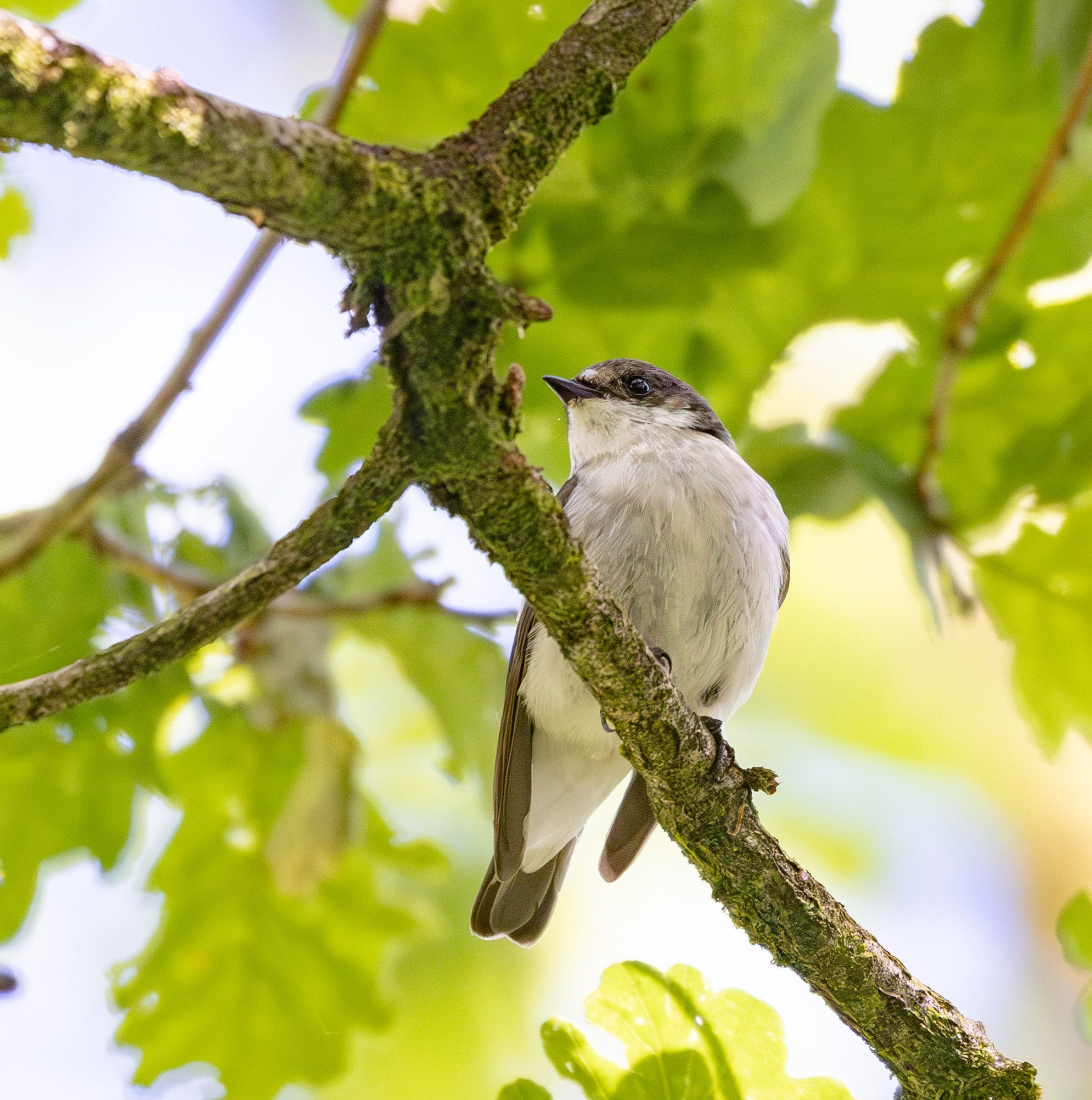
Pied flycatchers are true deciduous specialists, often found around oak trees. I soon realised it didn’t matter how pizzazzy the male was with his tuxedo colouring. He was still smaller than a sparrow and concealed in a vast forest thick with summer leaves. With more subdued chocolate brown plumage, the females would be even harder to find.
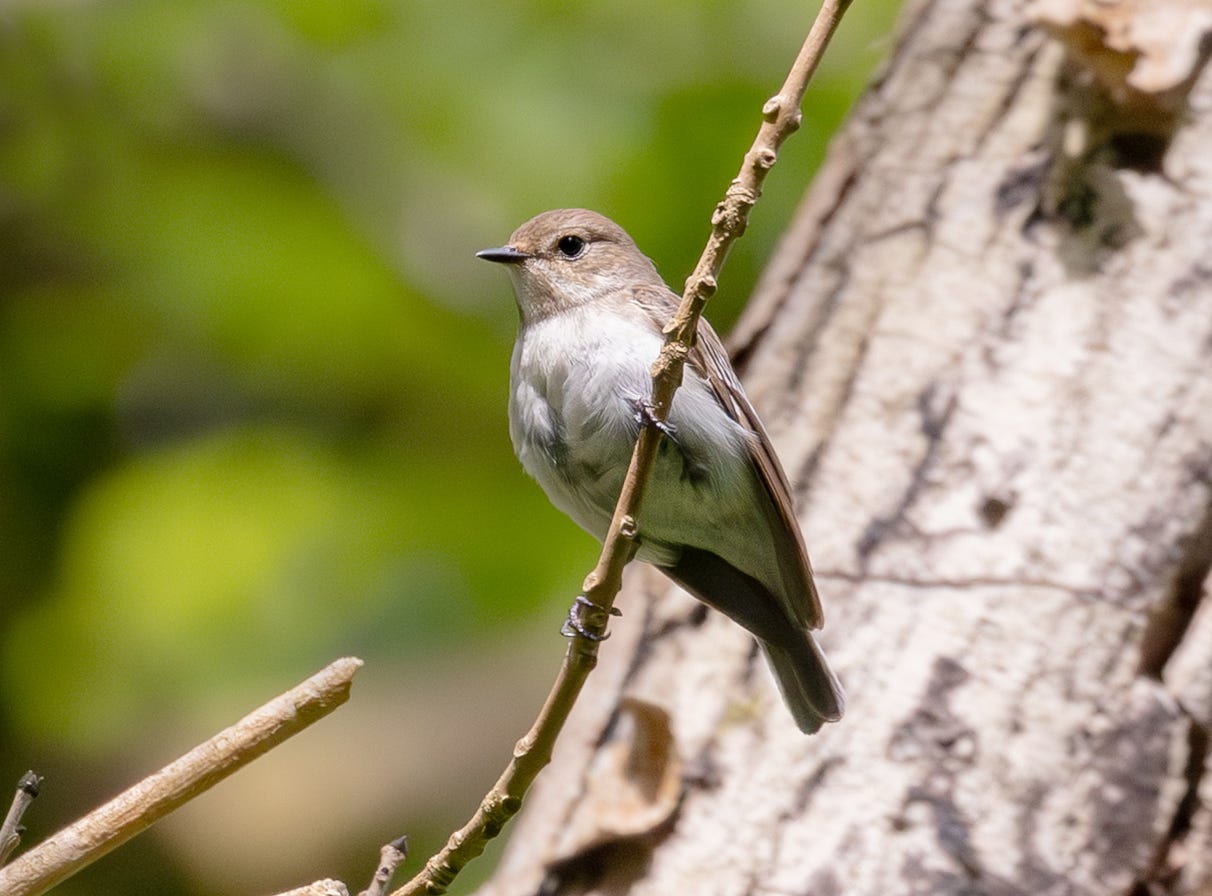
Luckily for me, pied flycatchers are particularly abundant in Wales and they were actually the forest bird I saw most often, always appearing in a flash of monochrome amongst the greenery. As their name suggests, pied flycatchers hunt insects including caterpillars and beetles as well as flies, but they will also feed on seeds and fruits given the chance.
Nuthatch
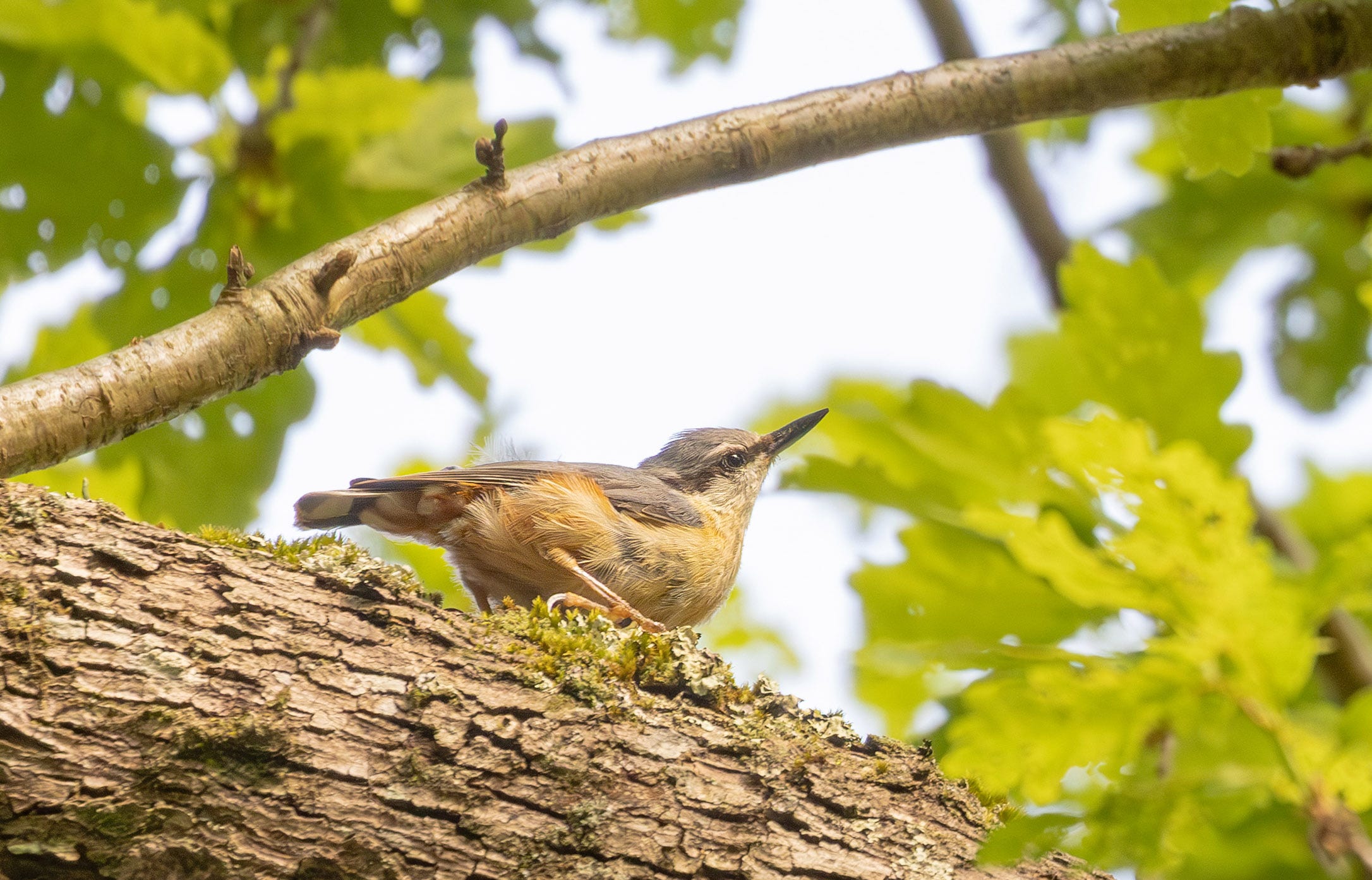
This is a bird that people in the south of the UK will see often, but they’re mostly absent in northern Scotland so I was thrilled to see them in Wales. It’s a nuthatch, which resembles a small woodpecker with a lovely blue-grey back. The nuthatch is the only bird in Britain that hops down trees head-first.
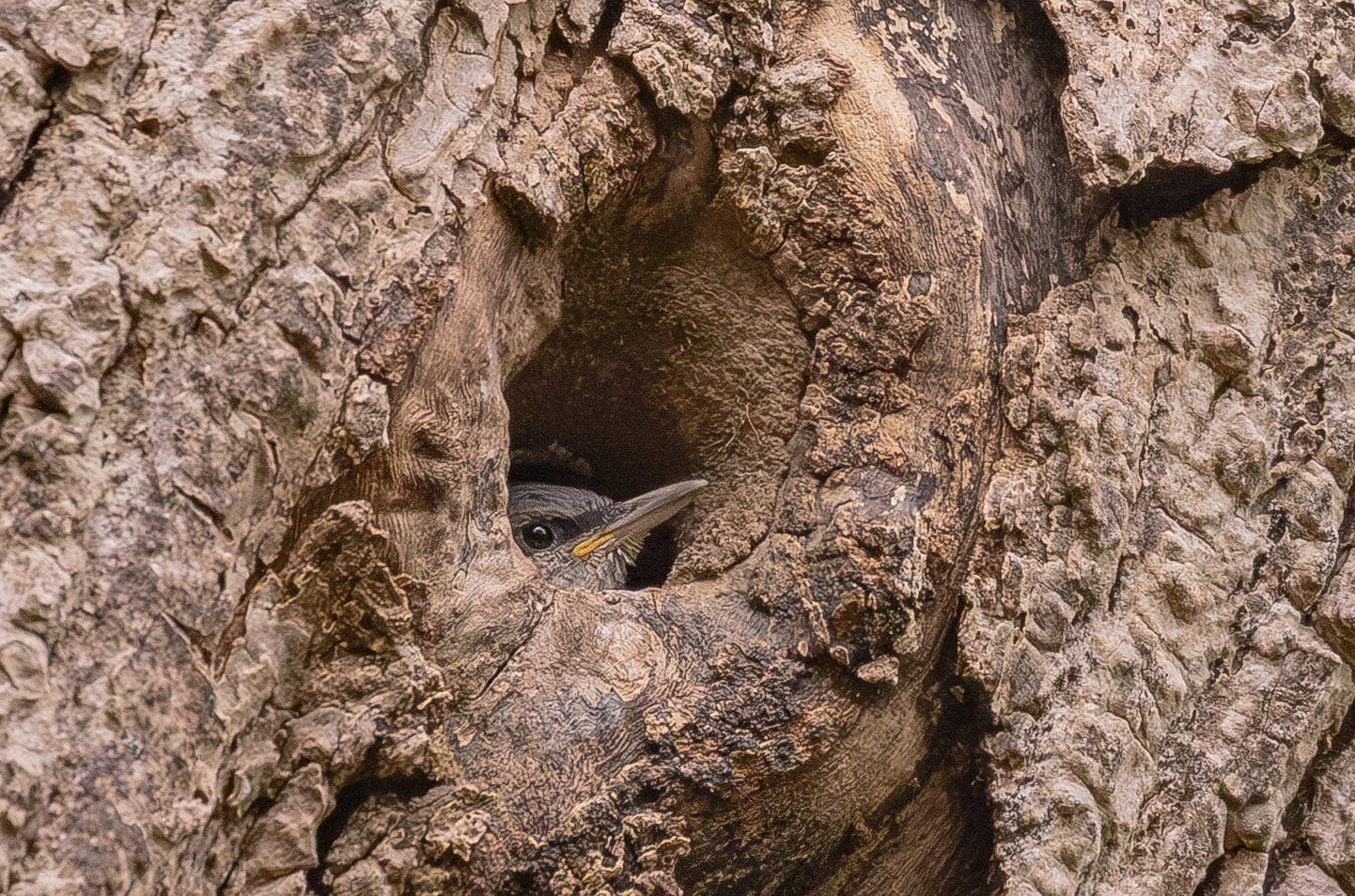
Nuthatches are usually found in deciduous forests, and adopt holes in trees as their nest sites. I’d been watching one hop into the same hole over and over, and eventually the little face of a chick poked out. Nuthatches rarely stray far from the woods where they hatched, so I hoped this one liked what it saw outside!
Yellow-barred Longhorn Moth
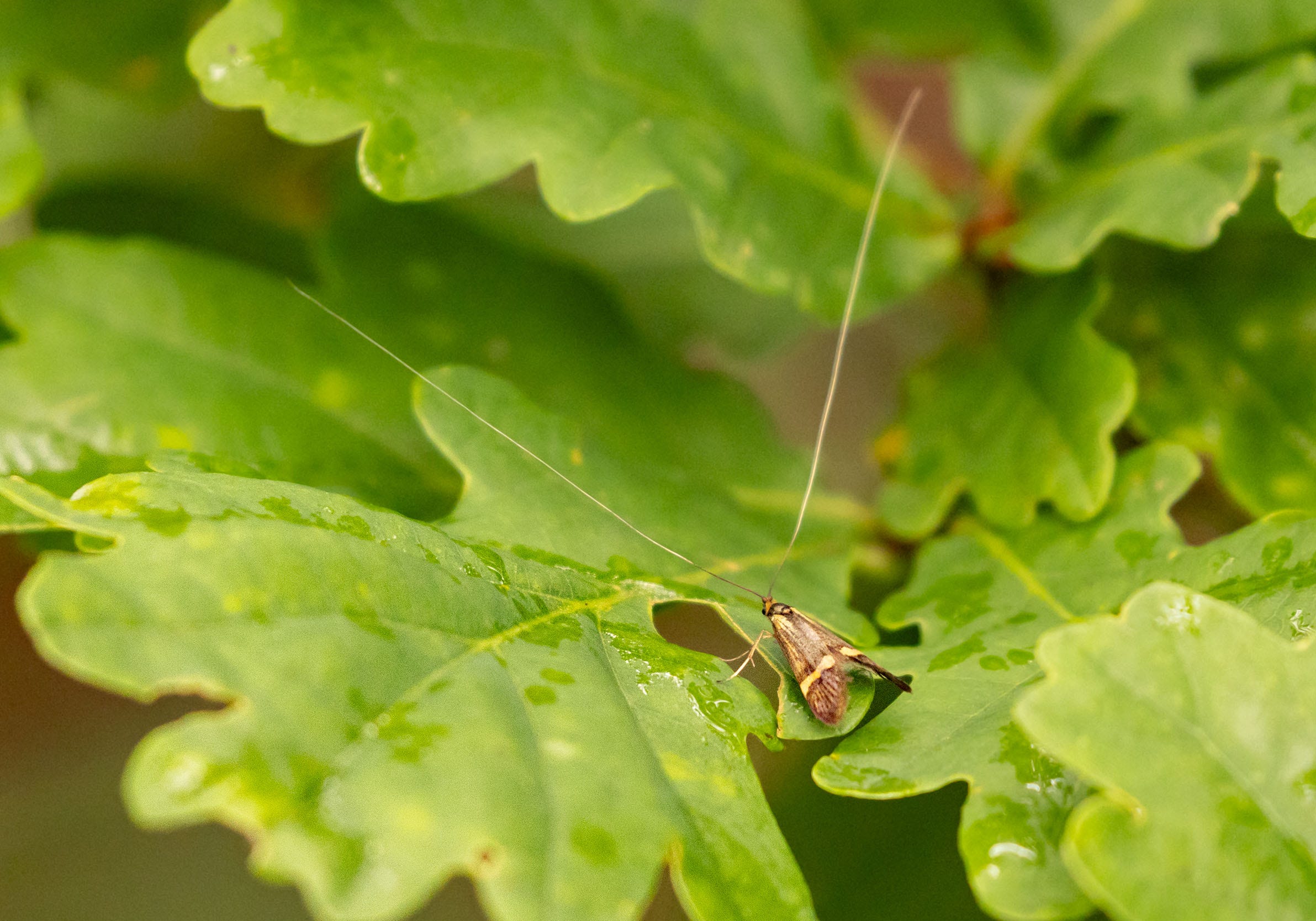
This was a complete surprise, and a delightful one at that. I was walking along a path in the Elan Valley in Mid Wales when a flicker of moth wings caught my attention. I must say I’m not usually taken by micro-moths, preferring chunkier and fuzzier macro moths, but this one was different. In flight, it looked like it had a hair attached to it, but when it landed I realised it simply had gigantic antennae.
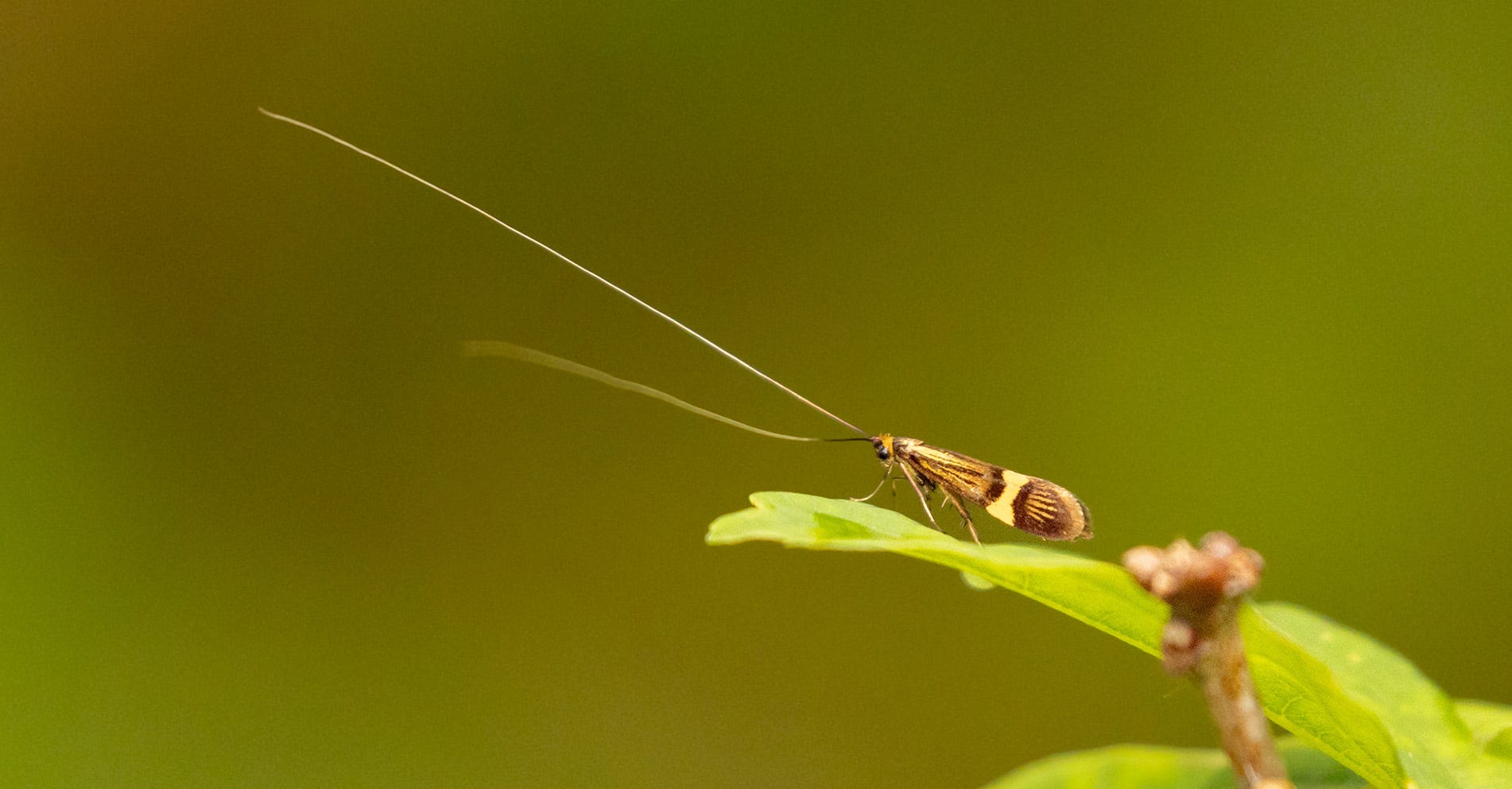
I’d never seen anything like it before! Not just crazy antennae, but a band of rich gold across its wings too. After some digging, I identified it as the yellow-barred longhorn moth. A name of splendour for such a glamorous insect.
Although fairly common in England and Wales, the yellow-barred longhorn is a lot more scattered elsewhere in the UK so it had passed me by up in Scotland. They’re closely associated with the damp, deciduous woodlands I was exploring. Once my attention was pinned to the forest floor, I noticed there were half a dozen of them, each perched on a different leaf.
I read recently that the age at which a tree is considered “ancient” depends on the species. Birches need to reach 150 years old, whereas for oaks it’s 400 years old. Yews – Britain’s longest lived tree – need to be a whopping 800 years old to be classed as ancient!
The broad-leaved forests of Wales were on a whole other level to the sprawling conifers I was used to back home, and I savoured as many vivid, glossy and soggy trees as I could.
My top three oak woodland spots in Wales
Coed Ganllwyd Nature Reserve, Dolgellau: With its waterfall tucked away in the trees, leading to a lively stream threading through the forest, this is an undeniably tranquil spot.
Gilfach Nature Reserve, Rhayader: This Wildlife Trust site is an old hill farm and has a lovely bird hide overlooking a river with plenty of dippers.
Glannau Wood, Rhayader: Part of the amazing Elan Valley, this site has both huge mature trees and so many oak saplings that they line the footpaths like bracken.
You might also enjoy…
A Hike in the Clouds

Standing on the summit of the Great Orme feels like you’ve clambered into the clouds. This limestone headland near Llandudno on the north coast of Wales was spectacular on a gleaming morning in May, as a silky band of ocean wrapped around the cliffs.
I imagine these photos too an extraordinary amount of patience. They’re phenomenal
Thank you Rebecca, a lovely wander through Wales and connection with the British bird life. Remembering my days from being a young ornithologist in UK 🌹